
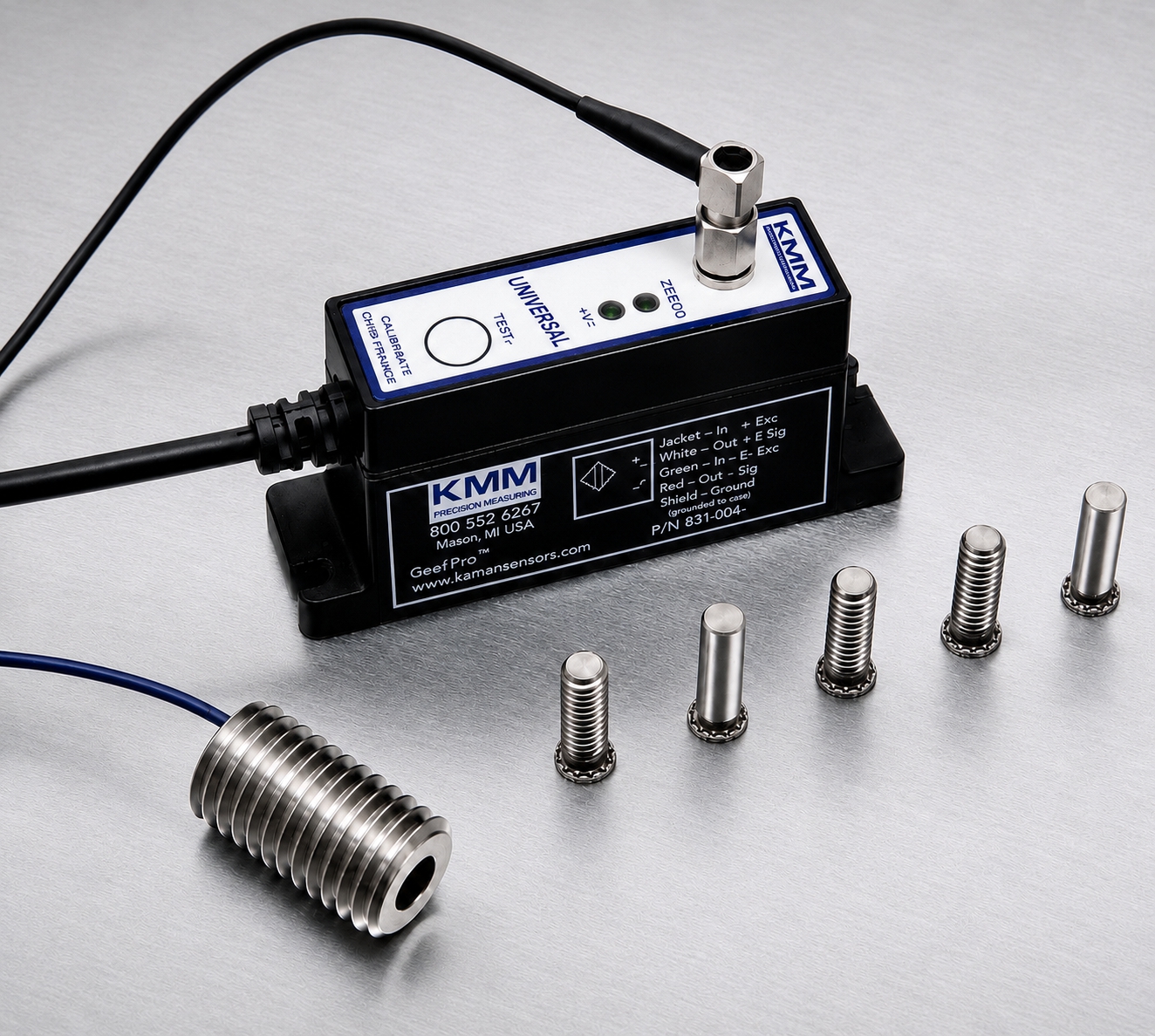
ThreadChecker™
Non-contact eddy current system for thread presence verification
- Non-contact application-specific sensors that verify thread presence or absence
- Universal electronics compatible with any probe/material combination
- Four internal probes (4 mm to 10 mm) and two external probes (6 mm and 8 mm)
- Teachable — also detects material sorting, plating presence, and absence of heat treatment
- Checks threads regardless of part cleanliness
- Designed for in-die use
- DIN rail mounting option
- CE-compliant with IP-67 rated probes and electronics
- Switched and analog outputs for direct PLC integration
Specifications
| Operating temperature range | 0°C to 70°C |
|---|---|
| Switching speed | Up to 3 kHz |
| Probes | Four internal (4-10 mm); two external (6 mm, 8 mm) |
| Outputs | Switched and analog |
| Protection | Reverse polarity and short circuit; IP-67 probes and electronics |
Sensors
Downloads
Certifications
DECLARATION OF CONFORMITY
Conforms with Applicable Standards of:
Council Directive 2004/108/EC on Electromagnetic Compatibility (EMC Directive)
Council Directive 2006/95/EC on Low Voltage Equipment Safety (LVD Directive)
EMC
EN 61326-1:2006 — Industrial Electrical Equipment for Measurement, Control and Laboratory Use
EN 55011:2007 — Class A Group 2 Radiated Emissions
LVD
EN 61010-1:2001 — the ThreadChecker requires a limited-energy power supply circuit per Article 9.3.
Options
Accessories
Cables, mounting hardware, and replacement probes are available. See the Accessories data sheet for details.
Frequently Asked Questions
What can the ThreadChecker detect besides threads?
As a teachable eddy current tool it also handles material sorting, plating presence, and absence of heat treatment — any physical property difference tied to material conductivity.
Does part cleanliness affect the ThreadChecker?
No. It checks threads regardless of part cleanliness, which reduces the cost of implementation in production environments.
How does it integrate with a control system?
Use the switched output wired to a PLC to alarm when no thread is detected, or monitor the analog voltage and program your controller with application-specific limits. Switching speed is up to 3 kHz.
Related Products
KD-2446
Non-contact high-precision proximity measuring system
KD-2306
Single-channel multi-purpose non-contact displacement sensing system
SC-2440
Self-contained analog output displacement sensor
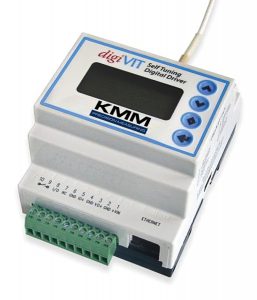
digiVIT
Advanced digital signal conditioner for non-contact position and displacement sensing